Review
Siding & Exterior Trim
Vinyl and fiber cement both belong on Indy houses. The right one depends on how long you plan to stay, and on the wall itself.
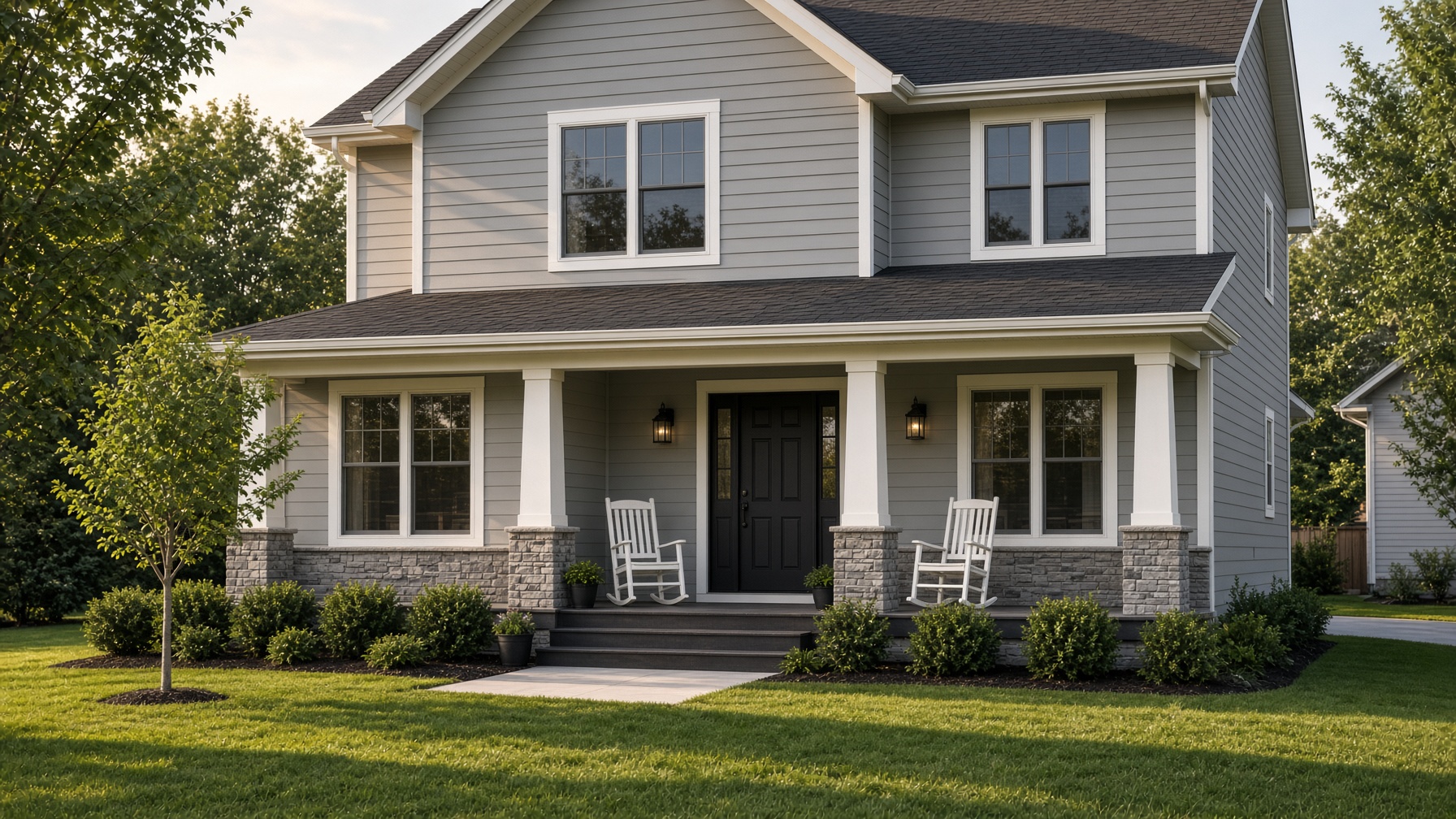
What actually changes the estimate
- Square footage of wall area
- Material grade and profile (thicker vinyl, or a factory-finished fiber cement color)
- Stories, gables, and corner count
- Removal of the old siding and any soft sheathing underneath
- Labor: fiber cement is heavier and needs dust-controlled cutting
- Fascia, soffit, and trim bundled into the same job
- Season and crew availability after storms
Vinyl
Color goes through the panel, so a scuff rarely needs paint. It is light, and most upkeep is a wash. It can crack when it is very cold and it will melt near extreme heat. Best when you want low ongoing work.
Fiber cement (James Hardie)
Non-combustible, tougher against impact, and steady through freeze-thaw. Factory color finishes last longer than a field paint job, but you should still plan on a repaint cycle later. The premium is mostly material weight and crew time, not a mystery fee.
Fascia and soffit
Many siding jobs uncover tired fascia or blocked soffit vents. Aluminum and vinyl trim need little paint. Keeping soffit vents open matters in humid summers and cold attics. Linear footage and the condition of the roof edge drive that part of the work.
Ready for the real number?
Specs and a quote for your house go by email. This page does not take payment.